Editorial staff
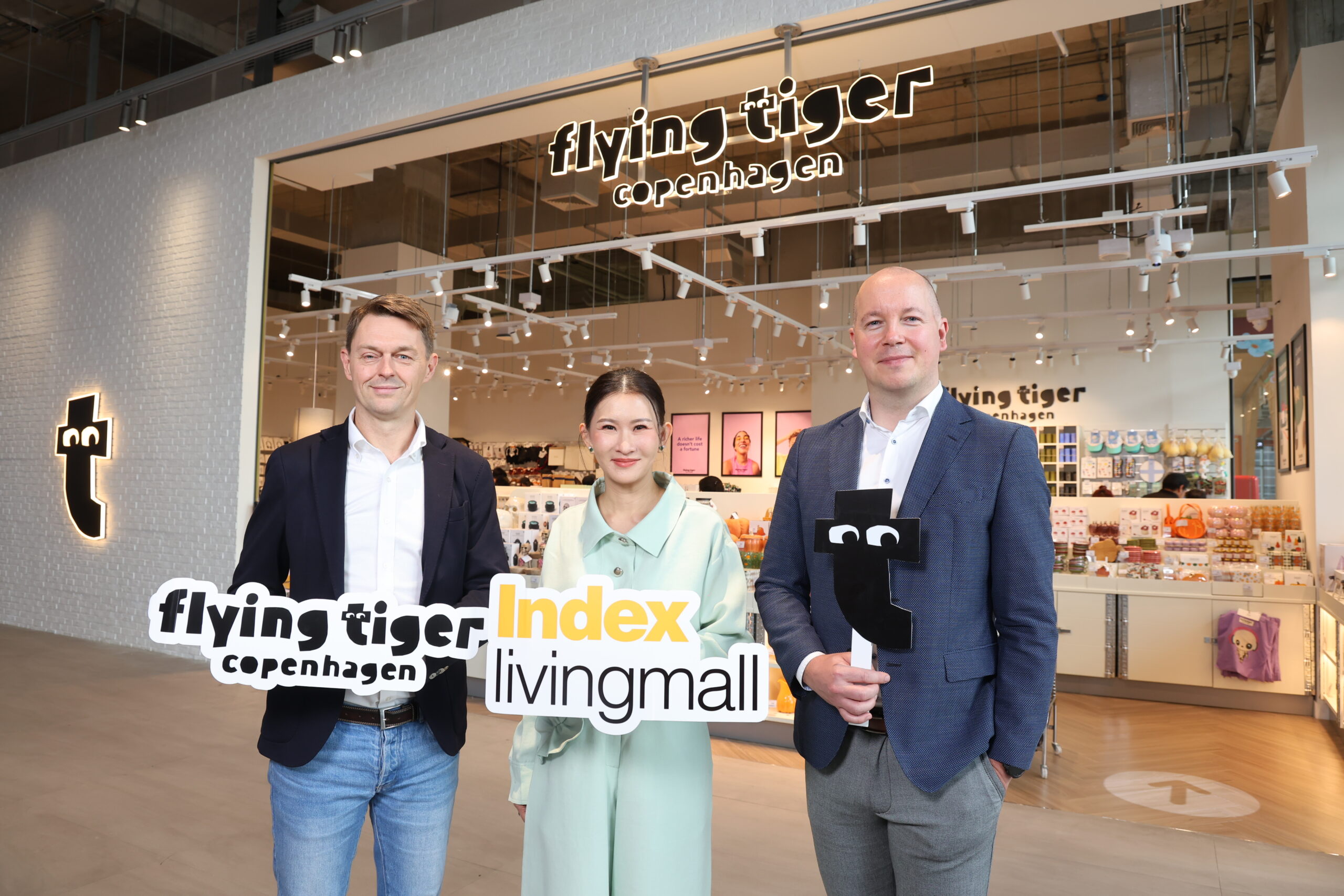
Index Living Mall Plc (ILM), Thailand’s leading integrated retailer of furniture, home furnishings and decorative items, has launched first Flying Tiger Copenhagen, Danish variety & lifestyle retail brand at Emsphere.
Under its exclusive franchise rights, the company plans to spend 200 million baht to open 30 branches in total by 2027 under the 3-year plan.
Kridchanok Patamasatayasonthi, ILM’s managing director, said that the company continues to diversify its business. The latest move is to spend 200 million baht to expand its retail lifestyle business during 2025-2027. To pursue business diversification is to synergize with its core businesses and drive more robust growth.
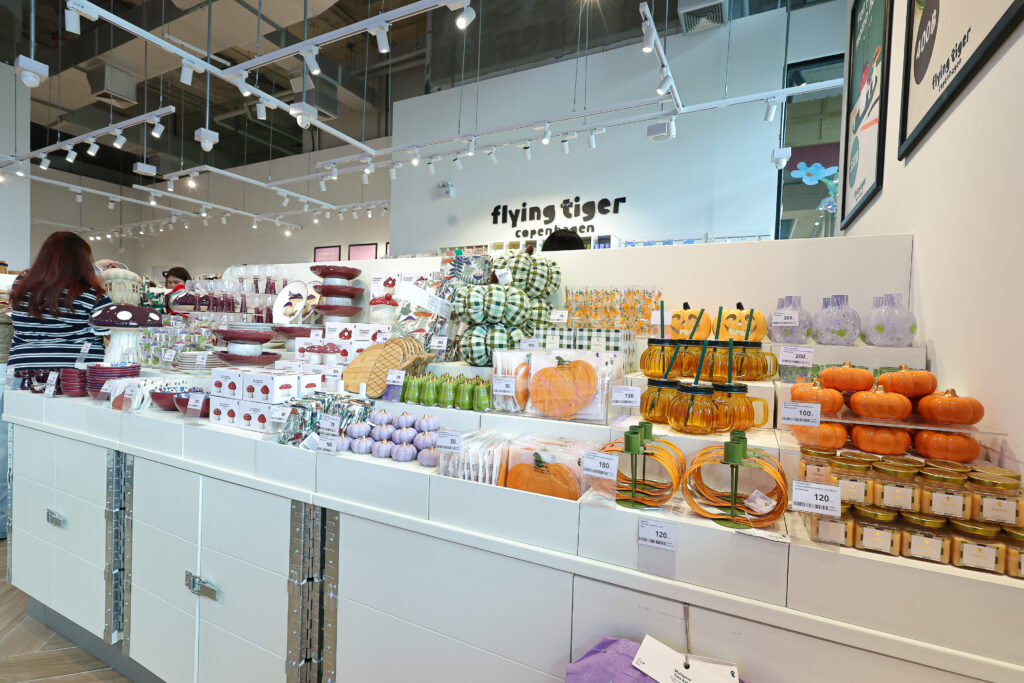
Recently, it debuted the first world-renowned “Flying Tiger Copenhagen” store on the second floor of The Emsphere shopping center. This 160 square meters store is favorable as it generally attracts shoppers with high purchasing power, such as working professionals from surrounding prime office buildings.
It also caters to the lifestyles of elite urbanites and international tourists. Five more branches will be launched this year, including ILM Pattaya. Targeted locations at high-traffic shopping malls, such as Fashion Island, Seacon Square, Platinum Fashion Mall, and The Mall Bangkapi.
The company aims to have total 30 branches throughout the country within a three -year plan, targeting locations within leading shopping centers and Index Living Malls. An average store size is 150 to 250 square meters.
ILM projects 800 million baht in revenue to be achieved within three years, or by 2027.
Currently, 80 percent of Index Living Mall’s customer base consists of Gens X to Y, and 10 percent of Gen Z, on average. By introducing a brand that is more amicable to the younger generation, the company hopes to increase brand recognition, enhance capabilities, and drive sustainable business growth.
Index Living Mall operates under the “INDEX NextExperience & Beyond + Sustainable Future” strategy, in line with its 3-year (2024-2026) business plan. This strategy adheres to the “triple bottom line” concept with the “3P – Performance–People–Planet” formula, to drive sustainable business growth while moving towards “beyond core business.”
“Flying Tiger Copenhagen” has started off with a simple concept, but has now become a phenomenon, transforming the way many people shop, and winning the hearts of people around the world. Spanning Europe, the Middle East, and Asia, most recently, the brand has expanded into Thailand with Index Living Mall as the sole franchisee in Thailand.
Currently, “Flying Tiger Copenhagen” has stores in 41 countries worldwide, totaling over 1,000 branches. This latest development has been designed to meet the diverse needs of customers and expand ILM’s customer base to the younger generation.

Opportunities of the lifestyle products in retail business
In shopping for variety and lifestyle items since the COVID-19 crisis, shoppers have increasingly searched for gift items and “small joys” that will serve to meaningfully enrich their lives.
Furthermore, consumer behavior and purchasing power in relation to variety and lifestyle products have shown some consequential significance (Sources: Euromonitor, Statista, NielsenIQ and Market Estimates – for 2024). This represents a substantial opportunity for the gift and lifestyle product retail market, valued at over 30.3 billion baht in 2024 and has been growing by as much as 7 percent annually.
This fact is clearly evident in the significant growth in purchasing power in relation to this type of merchandise in major cities, including Bangkok, Chiang Mai, Phuket, and Pattaya, as the lifestyle franchise stores experienced a high growth rate of 66.7 percent, clearly demonstrating the high market demand.
Furthermore, the positioning of “Flying Tiger Copenhagen” through affordable prices and premium designs, presents an opportunity to expand the retail market and fill a gap with the unique Danish-style products.
A wide selection of merchandise meets the needs of shoppers of all generations
Currently, the insight of consumers, particularly those in the Millennial and Gen Z groups, tend to appreciate and value fun and innovative lifestyle products with the emphasis on unique designs that lend themselves to distinctive experiences.
A survey of shopping trends reveals that around 70 percent of lifestyle shoppers come into stores exploring for something “new” or “surprising”; 50 percent would look for small gift items or souvenirs; and about 45 percent seek products that enhance the enjoyment of daily life.
Those in the Gen Z (aged 15-25) group prefer products that are fun, unique, and rewarding to them as individuals, spending an average of 200-350 baht per visit. Young professionals (aged 25-35) focus on home decor, gifts, and other lifestyle items, spending an average of 400-700 baht per visit. Families with children (aged 30-45) focus on toys, party supplies, and seasonal decorations, spending an average of 500-1,000 baht per visit. The deciding factors in purchasing everyday products are to add “feel-good” factor, fun and color to life, and to make every day more meaningful.
This is consistent with the “Flying Tiger Copenhagen” brand DNA that embeds ideas and creative concepts in every item that happens to fit in perfectly with Thai culture (perfect cultural fit) in terms of function and daily use.
Martin Jermiin, chief executive officer of Zebra A/S, operator of the lifestyle retailer “Flying Tiger Copenhagen”, said that Flying Tiger Copenhagen’ is a Danish variety and lifestyle retailer under the brand concept of ‘affordable luxury’. The brand focuses on offering creative experiences and accessible design products at affordable prices for customers worldwide.
He added the company plans to grow through a franchise model and continuously expand into countries around the world, not only in Europe, but also throughout the Middle East and particularly in Asia. Thailand is a target market that we see an opportunity for expansion, as the variety and lifestyle retail business has high potential with strong growth outlook due to increasing purchasing power, urbanization, access to technology, and changing consumer behavior which prioritizes experiences and products with unique and distinctive designs that are aimed at fulfilling everyone’s happiness.


