
Editorial staff
Thais return to home cooking amidst economic slowdown.
The 1 Insight reveals consumer trends in 2025, showing a clear increase in spending on grocery products amidst the economic slowdown. Across nearly all age groups, people are turning to home cooking or choosing food for daily meals, resulting in growth in both the volume and frequency of grocery spending.
This reflects a shift in consumer behavior, as people spend more cautiously and noticeably reduce dining out at restaurants, as reported continuously in recent media.
Deep dive into generational behavior
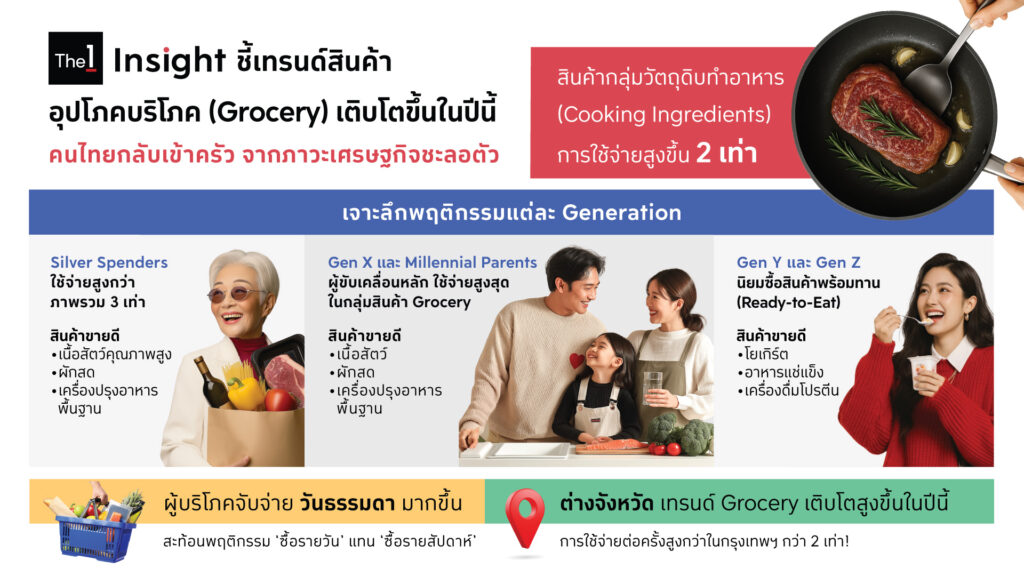
With changing lifestyles, Thai consumers of all ages are increasingly cooking at home. Demand for cooking ingredients has therefore risen significantly, doubling in 2025. Cooking is not only a way to control expenses but also an investment in quality of life—supporting both health and family relationships.
Although smaller in number compared to other groups, Silver Spenders records the highest spending per person—three times higher than the overall average—favoring premium meats and organic vegetables.
While Gen X and Millennial families, the key drivers of grocery spending, spend the most on grocery items. Their most popular purchases are fresh meat, vegetables, and basic seasonings, reflecting home cooking as part of their daily routine. Their choices emphasize both variety and quality, meeting the needs of health and taste.
And, popular items of Gen Y and Gen Z are home cooking with convenient ready-to-eat products including yogurt, frozen food, and bread, along with health-oriented products such as protein drinks and alternative milk, which are gaining popularity.
More weekday shopping – provincial growth outpaces Bangkok
Detailed analysis also shows that consumers are shifting from weekend shopping to making purchases on weekdays more often, reflecting a strong trend toward “daily shopping” rather than “weekly shopping.”
Another notable trend is the growth of grocery spending in provincial areas, which has increased significantly more than in Bangkok. Average spending per trip outside the capital has grown at twice the rate of Bangkok, making provincial and secondary cities important markets for grocery products this year.
Opportunities in crisis: grocery – delivery – health trend
All these findings highlight that consumer behavior in times of economic slowdown is not stagnant but instead is adapting with flexibility, prudence, and specificity.
Businesses must adjust their strategies accordingly, placing importance on delivery services and omnichannel experiences that meet modern lifestyles with convenience, speed, and coverage—particularly for urban consumers who work from early morning until late at night.
At the same time, strengthening online platforms to deliver experiences on par with physical stores is essential.
For example, the collaboration between Tops and GrabMart allows The 1 members to earn points on every order, adding value and creating a seamless experience.
Meanwhile, the health-food trend with convenience—such as high-protein milk, which delivers nutritional benefits in an accessible form—is becoming another option that businesses should consider to drive growth amidst economic challenges.


